
A year ago I wrote Electronics from Scratch, a starter guide to hardware for the modern age. The gist of the post was that LLMs are massively lowering the barrier to entry for hardware - no need to grind through textbooks of electronics theory, just buy a cheap starter kit and use AI to create progressively more challenging exercises until you know enough to work on problems you care about.

Over the past year LLMs took my ideas, like my optimal egg machine and DIY bio lab, and designed circuits, selected components and wrote firmware for me. As the models improved, they helped me scale to increasingly complex projects, like this automated work cell for a biology lab.
I wanted to write this post because in the background of the software agent takeoff there’s been a quieter revolution in hardware that’s transforming every layer of the traditional engineering stack, making it easier and easier to build ambitious things in the real world. This is my experience of the rise of vibe hardware.
Code to CAD
When I started my journey into hardware I had never done 3D design, but I knew how to code, so the first tool I tried was a programming library called OpenSCAD. But no matter what I tried I wasn’t able to get LLMs to translate my thoughts into useable 3D designs. I was forced down the traditional route of designing using Fusion360.
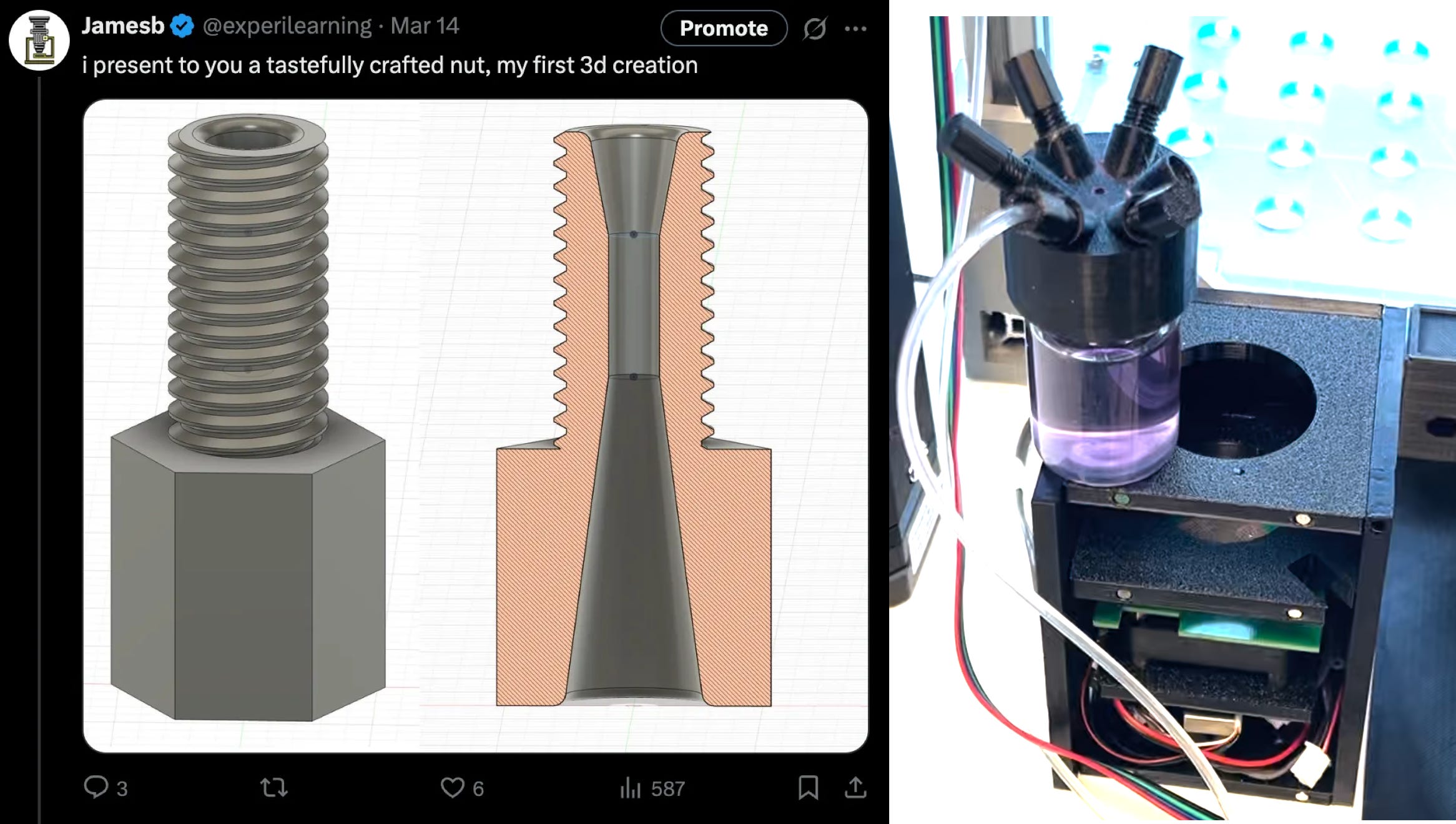
Six months ago, fuelled by Claude Code psychosis, I tried again and was shocked to find that it worked. I locked myself in my room over Christmas and used Claude code to convert all of my designs to a library called build123d.
After many iterations I was able to create a better version of my existing designs and add functionality that traditional CAD tools make really challenging like assembly and simulation. As more things were converted over, the models got increasingly better context about how new components should be integrated into the design. It was an early sign that LLMs are going to make it much easier to express physical devices, integrate them and program the physical world.
Code to PCB
Another massive improvement that came in December was that code to PCB libraries started to work. The library I tried was TSCircuit, which lets you design circuits using React code.
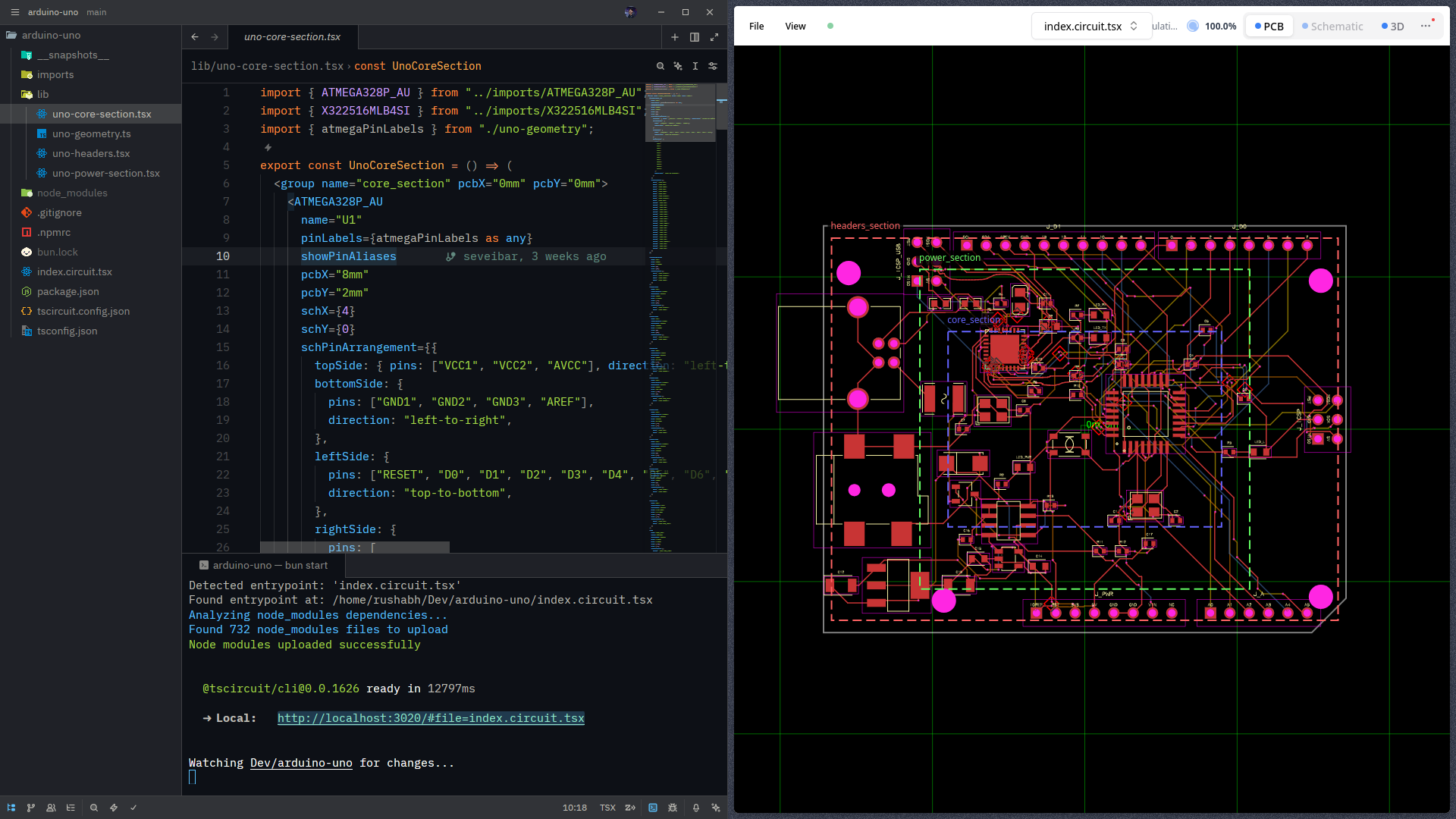
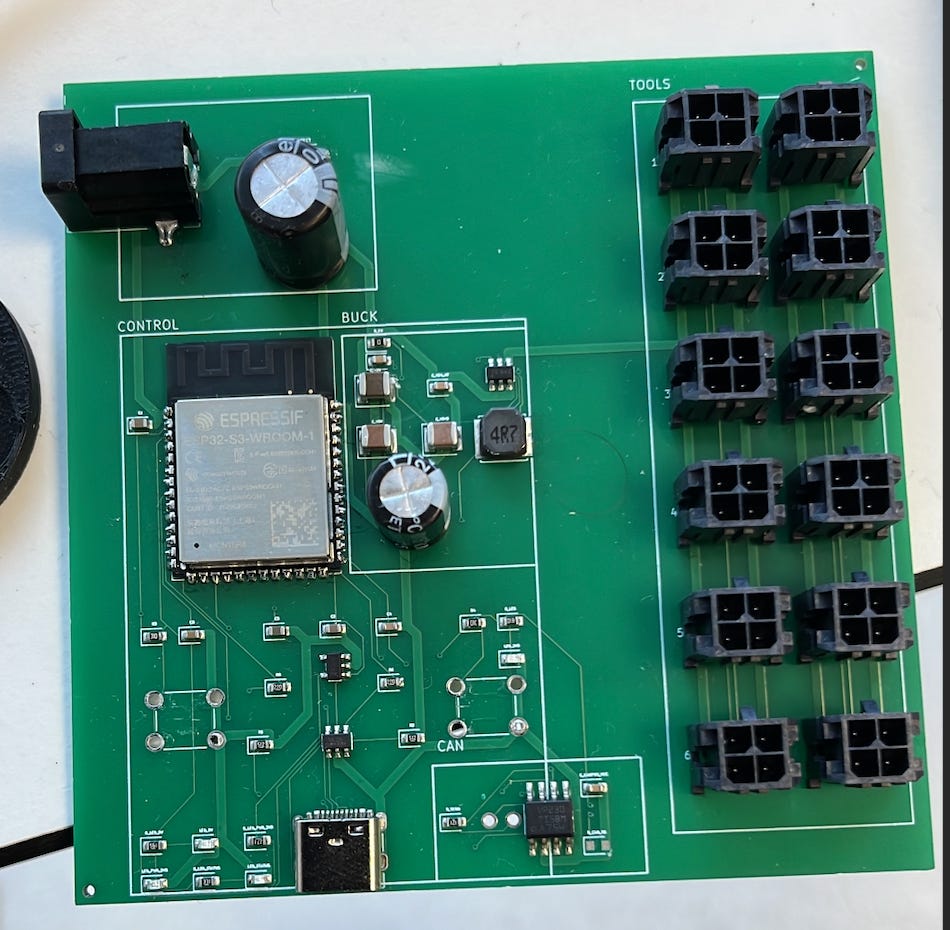
Here’s an example of an AI-designed board I sent off and tested. There were still some bugs with placement, rotations and routing, for example it had incorrectly rotated buttons which had to be de-soldered, the routing was messy and the LEDs were the wrong way round but the rest of the board worked. The bugs were minor relative to the massive speedup I got being able to go directly from an idea to a design without reading hundreds of pages of data sheets.
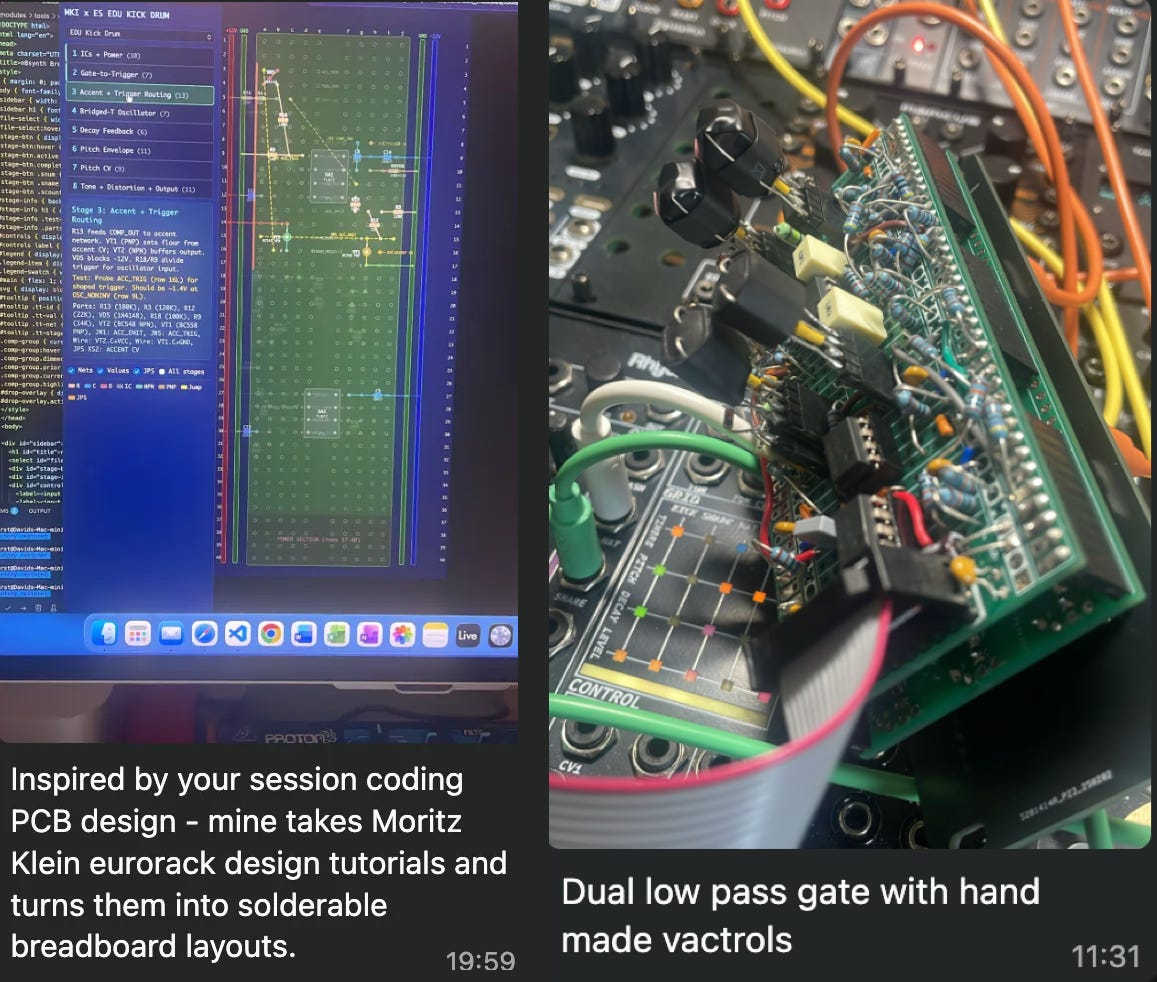
Just as LLMs have massively increased the number of people who can write software, they’ll make hardware accessible to entirely new groups of people - like my dad, who’s been using AI to build circuits for his modular synthesiser project.
Firmware and Debugging
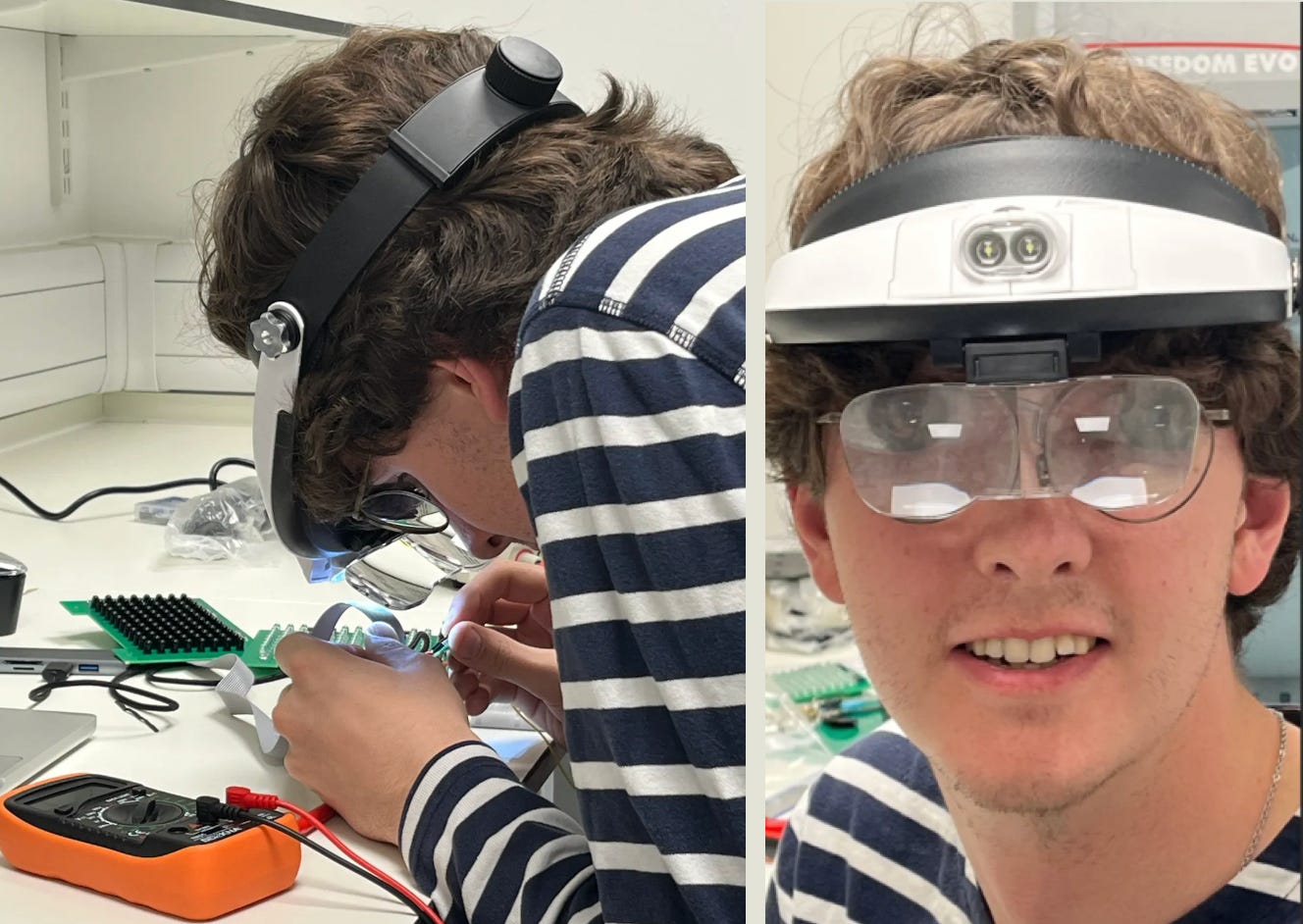
Since firmware is fundamentally a coding problem, it was already pretty much solved by the time I started learning hardware. There’s no need to learn low-level C/C++, and better still: if your board is expressed in TSCircuit or another code-to-PCB library, you can send it straight to a coding agent as context and it’ll one-shot the firmware.
There were a few cool things I tried since then, like giving Claude the ability to attach debuggers to live firmware. If you use a microcontroller like the ESP32-S3 you can debug over USB without needing a separate cable, so Claude can step through your code line-by-line while it’s running on a physical device.
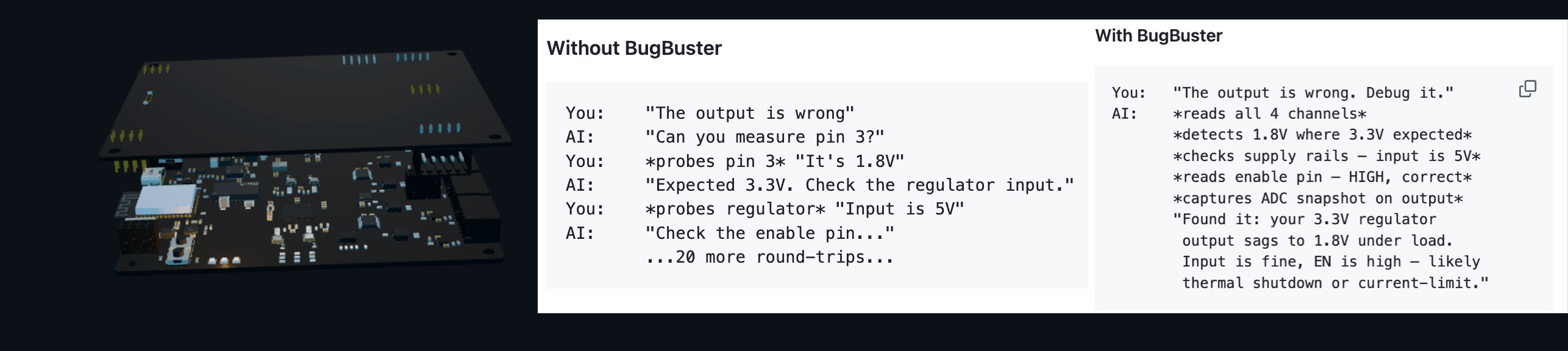
For physical debugging of voltages, give the AI context about your schematic and it can walk you through it step by step using a multimeter. Because going pin-by-pin checking voltages and typing each reading into the chat box gets tedious, people have built open-source boards to streamline the workflow. For example, BugBuster lets you connect multiple measurement probes to a board at the same time and allows coding agents to read them autonomously.
The main takeaway I got from the last year of tinkering is that every tedious, time-consuming or arcane step in the traditional hardware engineering workflow is being eroded away and replaced by much more humane interfaces. I think this is an exciting and under-appreciated shift - LLMs took software from a specialist craft to something millions of people could do. The same thing is about to happen to the physical world.
If you’ve also been trying these tools or are interested in these topics I’d love to hear your thoughts.